


/file/publisher-c1a3f893382d2b2f8a9aa22a654d9c97/2024/05/f77b9a0b621f0f4103171d161b217be8.jpg)

MOH reverts to old emergency call system for now following hiccups
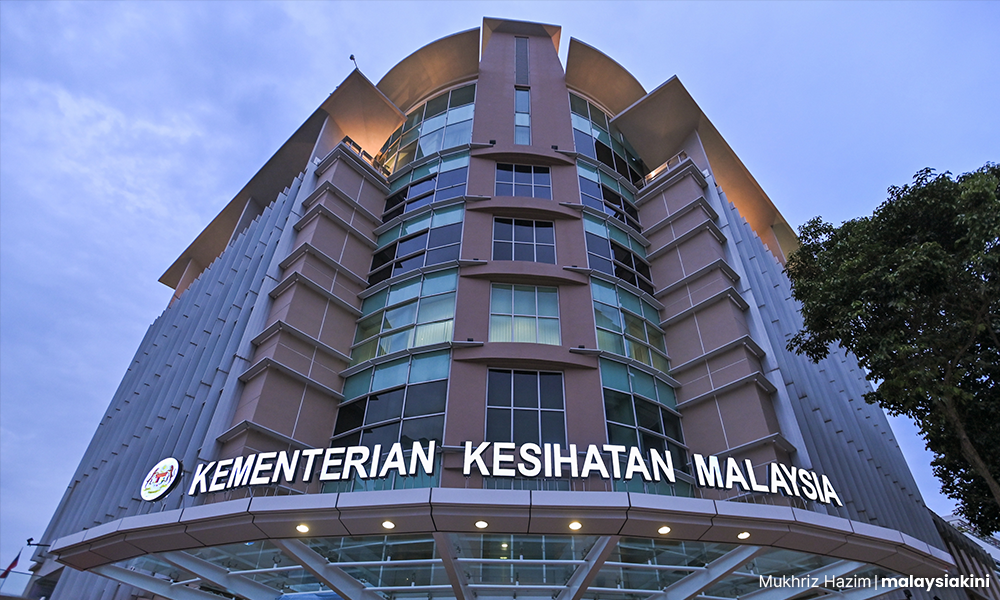
The Health Ministry will temporarily revert its medical emergency call and ambulance dispatching system to the old Mers 999 beginning tonight.
This followed complaints of technical issues that caused many emergency calls to fail to get through, while ambulances were mistakenly sent to faraway locations beyond their jurisdiction.
The Health Ministry will temporarily revert its medical emergency call and ambulance dispatching system to the old Mers 999 beginning tonight.
This followed complaints of technical issues that caused many emergency calls to fail to get through, while ambulances were mistakenly sent to faraway locations beyond their jurisdiction.
According to an internal memo sighted by Malaysiakini, the reversal will take effect nationwide at 10pm.
“Early notification, all 21 Medical Emergency Coordinating Centres (MECC) in Malaysia, including the Kota Bharu MECC, will be reactivated at 10pm today.
“The (use of) NG Mers 999 is put on hold temporarily. Session will be conducted manually,” said the message.
This was confirmed to Malaysiakini by a Health Ministry official.
Earlier today, Telekom Malaysia (TM) acknowledged the glitches faced by Malaysians over the newly launched service, claiming it was jammed over a sudden spike in calls received, which were mostly silent and prank calls.
The firm also stated that the 999-voice service continues to operate as the primary channel for emergency assistance, while the NG Mers 999 mobile application was just a complementary channel to reach emergency services.
“Upon this migration, we saw a surge in call volume immediately. While the previous system averaged around 50,000 calls per day, the new NG Mers 999 received close to 70,000 calls per day.
“About five percent of the calls were genuine emergencies, with the rest being silent and prank calls. However, the number of actual emergency incidents remained unchanged, ranging at an average of 3,500 emergency reports dispatched per day.
“This sudden spike affected system performance, and we have taken immediate measures to restore the service, including increasing server capacity and optimising the servers’ configuration,” they said, adding that additional resources were also mobilised in the call centre to cope with the high-volume calls.

TM stated that NG Mers 999 was implemented as the previous system had reached its technical limits and could no longer support the country’s evolving emergency requirements.
In July last year, Deputy Communications Minister Teo Nie Ching said the new system integrated web-based digital mapping, caller ID, geolocation services, artificial intelligence technology, and mobile smart applications into emergency incident management, providing more efficient assistance nationwide.
The NG Mers 999 system had also been expanded to more than 800 locations nationwide, a two-fold increase compared to the locations under Mers 999, she added.
Life and death matter
Meanwhile, MCA vice-president Wee Jeck Seng urged responsible agencies to ensure that only technically capable and experienced contractors are entrusted with such a crucial system.
“An emergency hotline is a vital safeguard for the public at their most vulnerable moments. Every call could be a matter of life and death, and therefore, the system’s reliability must be guaranteed without compromise.
“This is not a typical commercial application (but) a critical public safety infrastructure. If the choice of service provider is driven by cost rather than competence, or by connections rather than expertise, then the current disorder is no surprise. It is simply the predictable outcome of poor decision-making.
“The government is strongly urged to conduct thorough testing and simulation exercises before rolling out any public safety platform,” he said, adding that this includes staging trial operations, joint simulations involving multiple agencies, stress tests based on peak call volumes, and robust backup and risk-management plans.
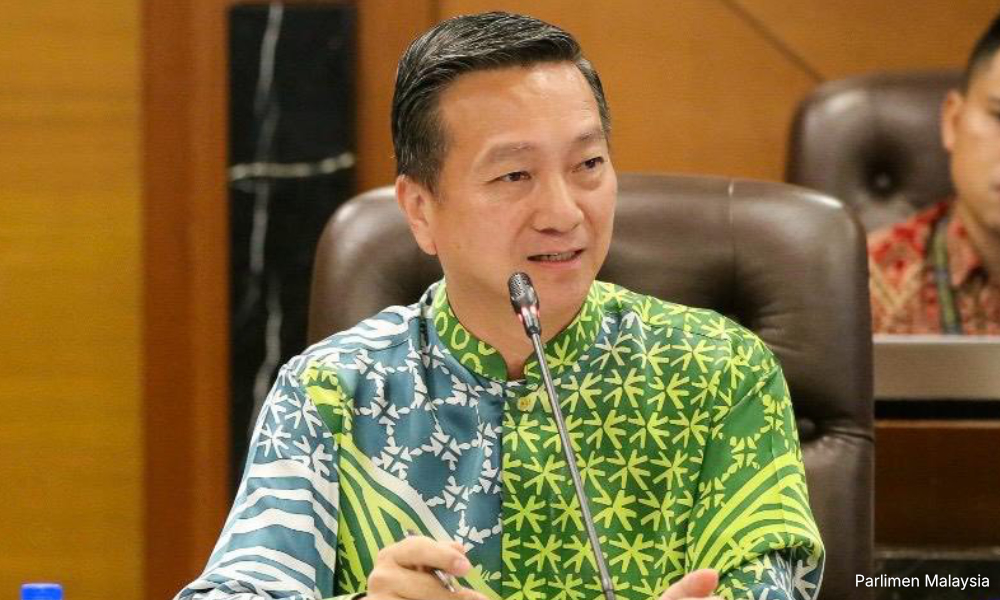
He added that the newly migrated system has yet to demonstrate improved speed, accuracy, and even equal stability since its launch on Nov 16.
“As it stands, its performance appears to fall short of its predecessor’s reliability. Since its implementation, the NG Mers 999 hotline has encountered repeated disruptions.
“In several locations, callers have faced the same problems, ie calls that did not go through, operators who did not answer, and connections that landed on the wrong line.
“Some individuals, even in life-threatening situations, were unable to reach the emergency centre despite trying multiple times. This is unacceptable and places lives at serious risk,” he said in a statement today.
Yesterday, DAP senator Dr A Lingeshwaran had also urged the government to address the issues surrounding NG Mers 999 before it became a national disaster, given that the system has been bogged down with technical issues since its launch.
He said that feedback from the public and stakeholders confirmed the system is not functioning properly, risking people’s safety and lives.
The DAP leader urged the government to resolve the matter immediately and be transparent with the public on what caused the problems, and to conduct a comprehensive audit of NG Mers 999 to identify its weaknesses and resolve them.
/file/publisher-c1a3f893382d2b2f8a9aa22a654d9c97/2024/05/74228b538844a512aaf9d37ed9b3af19.jpg)
/file/publisher-c1a3f893382d2b2f8a9aa22a654d9c97/2023/10/38f4dba2caca0e1c83e0b1cd4030caaf.jpg)
/file/publisher-c1a3f893382d2b2f8a9aa22a654d9c97/2025/05/a3b39a8b96339618c993076073143f24.jpg)
/file/publisher-c1a3f893382d2b2f8a9aa22a654d9c97/2025/08/8f48b921053d186f71ad8277bbe33264.jpg)
/file/publisher-c1a3f893382d2b2f8a9aa22a654d9c97/2025/08/a888d5b46d44f8c04926c8186a8b4a93.jpg)


Are you sure you want to delete this comment?
This action cannot be undone.